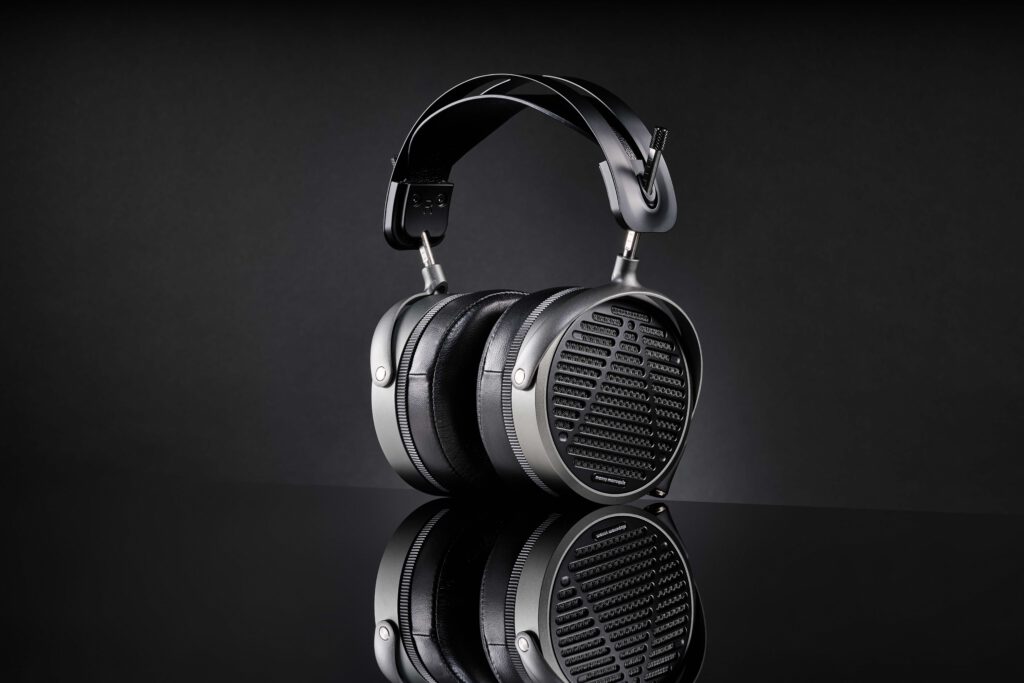
The Audeze MM-520 arrives with a demanding brief: take the already respected MM-500 platform, refine it for modern professional work, and make it more useful when the room is not available. Developed with renowned mix engineer Manny Marroquin, the new open-back planar magnetic headphone is aimed squarely at engineers who need a dependable second opinion—not a flattering hi-fi escape.

That distinction matters. A mixing headphone should not impress by exaggerating bass, hyping the top end, or making every vocal sound larger than life. It should reveal decisions: whether the kick and bass are truly separated, whether a vocal is sitting forward for the right reasons, and whether a dense arrangement still has depth once it leaves the studio. The MM-520 is designed around exactly that kind of scrutiny.
At its heart is Audeze’s 90 mm planar magnetic driver, using the company’s Fluxor magnet array, Fazor phase management and ultra-thin Uniforce diaphragm. The headline addition is SLAM—Symmetric Linear Acoustic Modulator—technology, which is intended to improve low-frequency definition and spatial clarity. On paper, it addresses one of the perennial compromises of open-back headphones: getting bass that feels properly anchored without blurring the lower midrange.

The MM-520’s likely appeal is not “more bass” in the consumer sense. It is the promise of better bass information. For mixing, the useful question is whether a sub-bass note has shape, whether the kick’s transient is masking the bass guitar, and whether a low-end enhancement is adding weight or simply fog. Audeze’s approach suggests a headphone intended to make these distinctions easier while retaining the articulate, midrange-led character that made the MM-500 a serious studio tool.
That midrange is central to the Manny Marroquin collaboration. Marroquin’s work has always demanded vocal authority, punch and emotional immediacy across a wide variety of playback systems. A headphone bearing his name should therefore be judged by how confidently it lets an engineer place vocals, guitars, snares and the critical harmonic information that defines a record’s identity. The MM-520 seems built around this practical priority: focus, translation and speed of decision-making, rather than a generic idea of absolute neutrality.
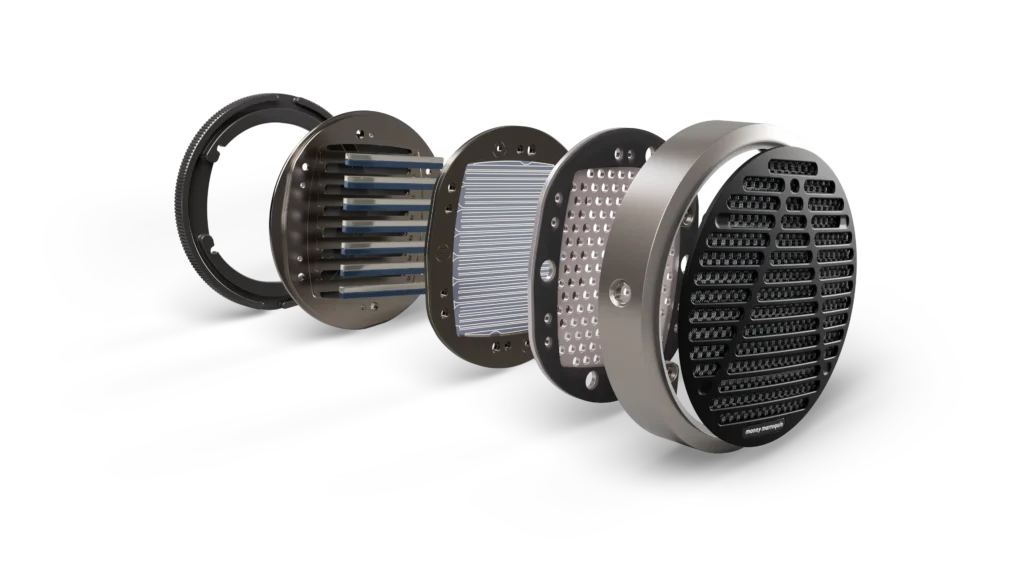
The design remains unapologetically professional. These are open-back headphones, so they are not for tracking with an open microphone, commuting, or working in a noisy shared space. They leak sound and allow outside sound in. In return, the open construction should provide a less enclosed perspective than closed-back alternatives—an important advantage when evaluating panning, reverb tails and the relationship between foreground and background elements.
Audeze has also addressed the daily reality of long sessions. The MM-520 uses upgraded memory-foam ear pads with magnetic attachment, making replacement and cleaning simpler than with permanently fixed pads. At 555 g, however, these are not lightweight headphones. Comfort will be personal, and engineers who work for many uninterrupted hours should audition them before committing. Their mass is the trade-off for substantial planar magnetic hardware and a robust, studio-ready build.
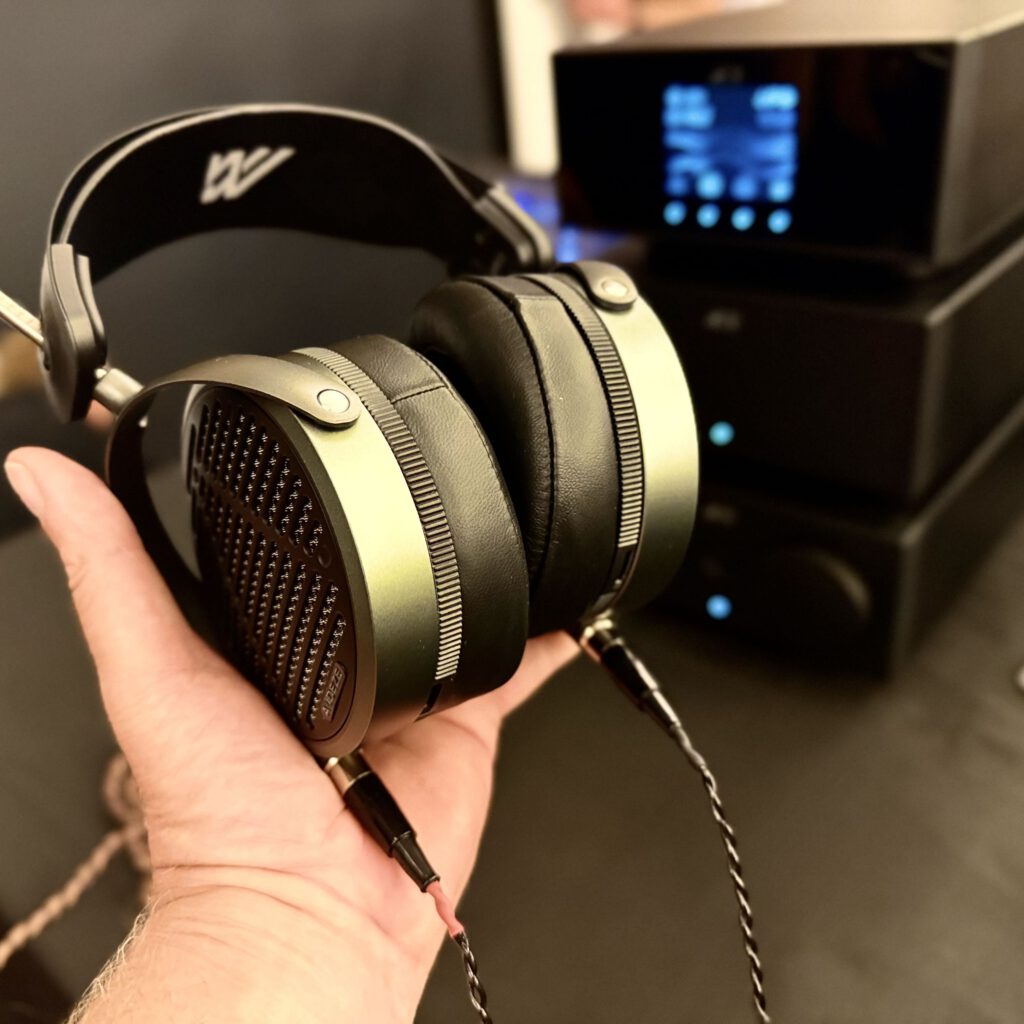
With an 18-ohm impedance and 102 dB/mW sensitivity, the MM-520 should work from many capable audio interfaces, but it deserves a clean, sufficiently powerful headphone output. A weak laptop jack may produce sound, yet that is not the same as giving a high-end planar headphone the control and headroom it needs. The supplied 2.5 m cable, 3.5 mm-to-6.3 mm adaptor and travel case reinforce the intended use: a serious reference that can move between the main room, a writing session and remote work.
At $1,699, the MM-520 is an investment. It is not the obvious choice for a beginner assembling a first setup, nor is it a substitute for knowing a good monitoring room. But for professionals and advanced creators who already understand their monitoring habits, it could become a highly valuable companion: a headphone for checking the difficult middle, interrogating the low end and continuing a mix away from trusted loudspeakers.
Conclusion
The real measure of the MM-520 will be translation. If its SLAM-enhanced low end and focused midrange help engineers make decisions that survive the car, earbuds, club systems and living-room speakers, Audeze will have delivered something more useful than a premium headphone. It will have delivered a portable reference—one shaped by a mixer whose career has depended on getting those decisions right.
You may also like
-
Audeze Maxwell 2 ANC Review: A Gaming Headset That Belongs in the Studio Bag
-
Welcome to the new Maxwell 2 ANC Gaming Headset from Audeze
-
Mitch Gallagher and Warren Huart discuss Mixing on Headphones
-
Learn about it from the masters – Kristian Kohle is a sought after producer and mixer of intense and contemporary metal
-
It’s no secret, yet a mysterious art: Mixing on Headphones